How to Choose an Overseas Manpower Recruitment Agency in India (2026)
1. One Stop Guide for the GCC Employers
Choosing an overseas manpower recruitment agency in India for GCC hiring in 2026 comes down to four verifiable checks: an active Recruiting Agent (RA) licence issued by the Ministry of External Affairs under the Emigration Act 1983, registration on the eMigrate portal, in-house trade testing infrastructure for skilled and semi-skilled candidates, and documented experience in your specific destination country and sector. All overseas recruitment from India to the six GCC countries — UAE, Saudi Arabia, Qatar, Kuwait, Oman, and Bahrain is regulated under the Emigration Check Required (ECR) framework. This guide covers what to verify, what to ask, and what to walk away from before signing any recruitment agreement.
This guide is written for HR managers, procurement leads, and project directors at GCC companies, particularly in construction, facility management, oil and gas, hospitality, and healthcare — who are evaluating Indian recruitment partners in 2026.
2.Understanding the Indian Overseas Recruitment Framework
Before evaluating individual agencies, it helps to understand how the system works. Overseas recruitment from India is regulated under the Emigration Act, 1983, administered by the Protector General of Emigrants (PGE) under the Ministry of External Affairs, Government of India.
Every legitimate Indian recruitment agency that places workers in ECR (Emigration Check Required) destination countries must hold a Recruiting Agent (RA) licence issued by the PGE. The MEA currently designates 18 countries as ECR — including UAE, Saudi Arabia, Qatar, Kuwait, Oman, and Bahrain. All overseas employment from India is processed through the eMigrate system at emigrate.gov.in.
Foreign employers can also register directly on the eMigrate portal to channel their recruitment needs through registered Indian agents.
3.The 7-Point Verification Checklist Before Engaging Any Agency
These are the practical checks every GCC employer should complete before signing a recruitment agreement.
1. Confirm the MEA Recruiting Agent Licence
Visit emigrate.gov.inand search the agency's name. Verify their RA number, the validity period of their licence, and that the status shows "Active." Any agency that cannot provide their RA number on request should be excluded.
2. Verify Destination-Country Licensing Where Relevant
For UAE deployments, ask whether the agency holds a Dubai Department of Economic Development (DED) trade licence in addition to their MEA India licence. This dual structure is uncommon but indicates the agency can legally transact on both ends of the corridor.
3. Confirm Physical Office Address
Legitimate agencies operate from verifiable physical premises. Request the address and confirm through Google Maps that the location matches their stated office. Online-only operations or agencies that refuse to share their full address are a red flag.
4. Ask About Trade Testing Infrastructure
For skilled and semi-skilled trades, ask whether the agency conducts trade tests in-house or outsource to third parties. In-house testing centres in India, Bangladesh or Nepal, where most blue-collar candidates originate — produce more reliable skill assessments because the agency controls the standards.
5. Confirm ISO 9001:2015 Certification
This is an internationally recognized quality management standard. Agencies that hold this certification typically operate with documented processes rather than informal practices.
6. Check Source Country Coverage
Agencies that source from India, Nepal, Bangladesh, and Sri Lanka give you alternatives when one corridor experiences delays — for example, during holiday season dispatch slowdowns in certain Indian states or eMigrate processing backlogs. Therefore, starting the recruitment process ahead of time will save you delays.
7. Request Sample Documentation
Ask for a template demand letter format and a sample 5-step process document covering job order to site arrival. A legitimate agency will share these within 48 hours. The speed up process depends on the size of the recruitment agency.
4.Five Questions to Ask in Your First Meeting
Beyond credentials, these conversational questions reveal whether the agency is operationally serious or simply well-marketed.
A. What is your typical deployment timeline from confirmed job order to site arrival?
For pre-tested skilled trade workers, 30 to 90 days is the realistic industry range. Anything faster usually indicates the agency is skipping testing or documentation steps. Anything significantly slower may indicate operational backlogs.
B. Walk me through what happens if a candidate fails the destination-country medical test.
Strong agencies have a documented replacement process and absorb the cost. Weak agencies push the cost back to the employer or leave it ambiguous.
C. How do you handle eMigrate documentation for our specific destination country?
A capable agency answers this in detail. An evasive answer suggests they rely on sub-agents to process documentation, which creates accountability gaps.
D. Can you share three employer references from companies of our size in our sector?
Be cautious of agencies that only provide references from outside your sector or from substantially smaller operations than yours.
E. What happens if a deployed worker leaves within the first six months?
Reputable agencies offer some form of replacement guarantee. Ask for the specific terms — calendar days, replacement cost, conditions.
5.Red Flags That Should End the Conversation
Walk away if you encounter any of these:
The agency cannot produce their MEA RA registration certificate on request
They quote significantly below market rates without explaining how
They cannot explain their trade testing process specifically
They lack a verifiable physical address in India
They cannot demonstrate experience with your specific destination country or sector
Communications come from personal email addresses rather than a company domain
6.What to Expect in a Typical Deployment Process
A well-structured deployment from India to a GCC site follows five steps:
Job order received — Employer submits trade requirements, quantities, qualifications, and project timeline
Sourcing and screening — Agency identifies candidates from their database and conducts interviews and background checks
Trade testing — Practical assessment of skill level at the agency's testing centre
Medical, visa, and eMigrate processing — GAMCA-approved medical clearance, visa stamping, emigration clearance documentation
Deployment — Worker arrives at site with all documentation in order
Total typical timeline: 30 to 90 days, depending on trade category and destination country.
7. Looking for a Dual-Licensed Indian Agency for GCC Hiring?
Max International is a Delhi-based overseas manpower recruitment agency operating since 2005. We supply verified workers from India, Nepal, Bangladesh, and Sri Lanka to employers across the GCC, Southeast Asia, and Europe.
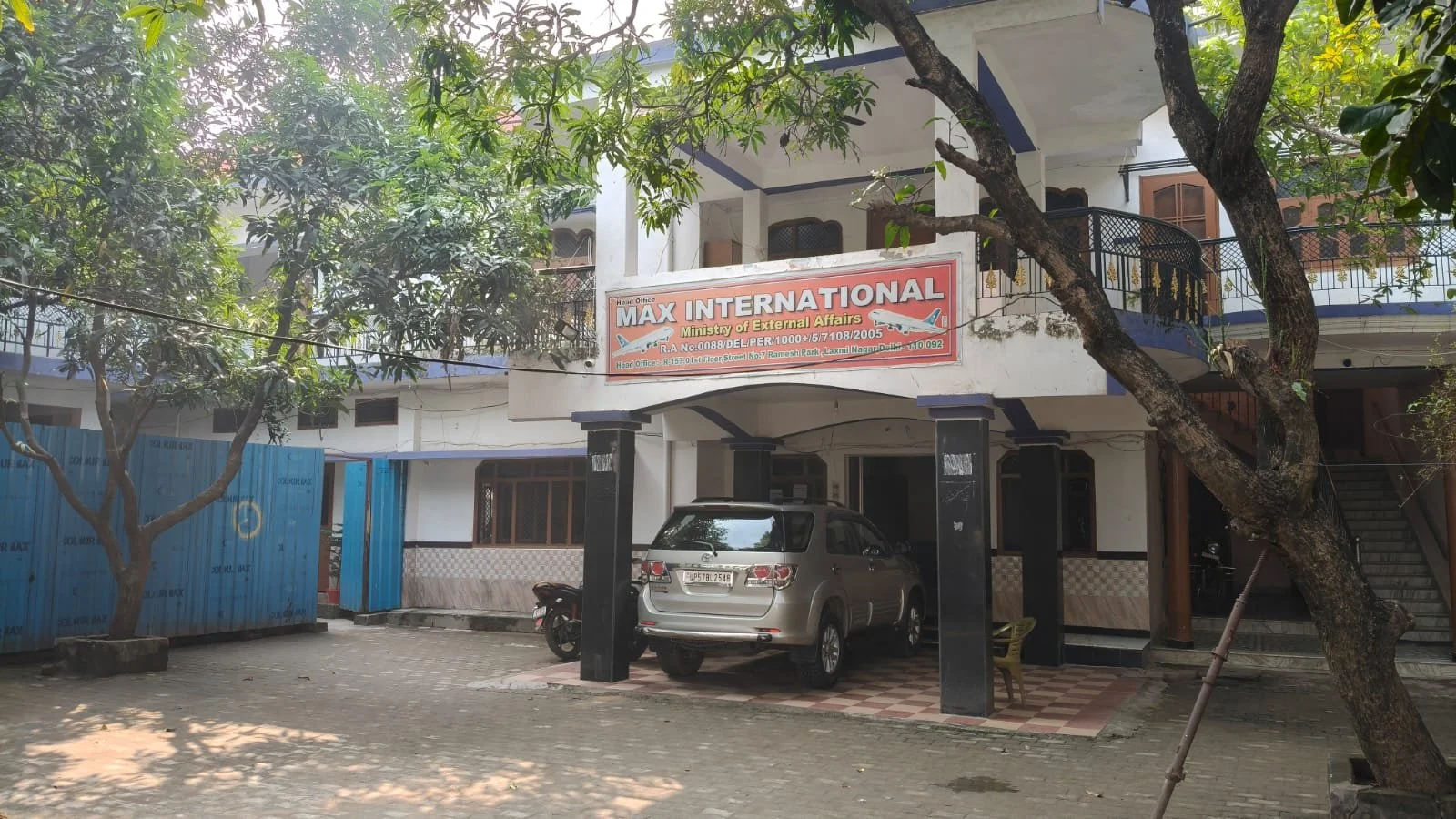
Our credentials include:
MEA India Recruiting Agent licence: RA No. 0088/DEL/PER/1000+/5/7108/2005
In-house trade testing centres in India and Bangladesh
Dubai DED trade licence No: 2423931.01
ISO 9001:2015 certified
If you're a GCC employer looking for a reliable manpower consultancy in India 👉 Talk to the Max International Team
Frequently Asked Questions
Q1. How do I verify an Indian recruitment agency's MEA licence?
Visit emigrate.gov.inand search by agency name or RA number. The portal shows the agency's current status (active, suspended, or cancelled), validity period, and registered office address. This database is updated regularly.
Q2. What is the difference between ECR and ECNR worker categories?
ECR (Emigration Check Required) applies to workers travelling to 18 designated countries on employment visas who hold ECR-stamped passports. They require emigration clearance from a Protector of Emigrants office. ECNR (Emigration Check Not Required) workers do not need this clearance but must still register on the eMigrate portal before travel.
Q3. How long does deployment typically take from India to GCC?
For pre-tested skilled trade workers, 30 to 90 days from confirmed job order to site arrival is the realistic range. This covers candidate selection, trade testing, medical clearance, visa processing, eMigrate registration, and travel.
Q4. Do I need to register on the eMigrate portal as a GCC employer?
Yes. Foreign employers seeking to employ Indian workers in ECR countries are required to register on the eMigrate system. This registration channels recruitment through licensed Indian agents and provides the regulatory framework for the entire deployment.
Q5. Can a single Indian agency cover both GCC and Europe?
A small number of Indian agencies hold both an MEA India licence and destination-country licences such as a Dubai DED licence, and operate across multiple regions including the GCC, Southeast Asia, and Europe. This multi-region capability is less common in the Indian recruitment industry.